Most businesses do not have an AI-tool problem. They have an execution problem. They subscribe to a writing app, an automation platform, a design tool and three different chatbots—then still have a growing list of work that never ships.
That is why my monthly plans include the premium tools I use to do the work. The software is part of my operating system, not another expense I push back onto the client.
The subscription pile is not a strategy.
Access to a tool does not automatically create a better landing page, a working integration or an automation your team can trust. Somebody still has to understand the goal, choose the right approach, build it, test it and improve it.
What “the full stack” actually unlocks
- Faster research and planning: turn rough ideas into a useful brief without weeks of meetings.
- Better design production: create and iterate campaign concepts, web layouts and supporting assets.
- Real development: build websites, internal tools, integrations and fixes—not just generate suggestions.
- Automation that connects: move information between the systems your business already uses.
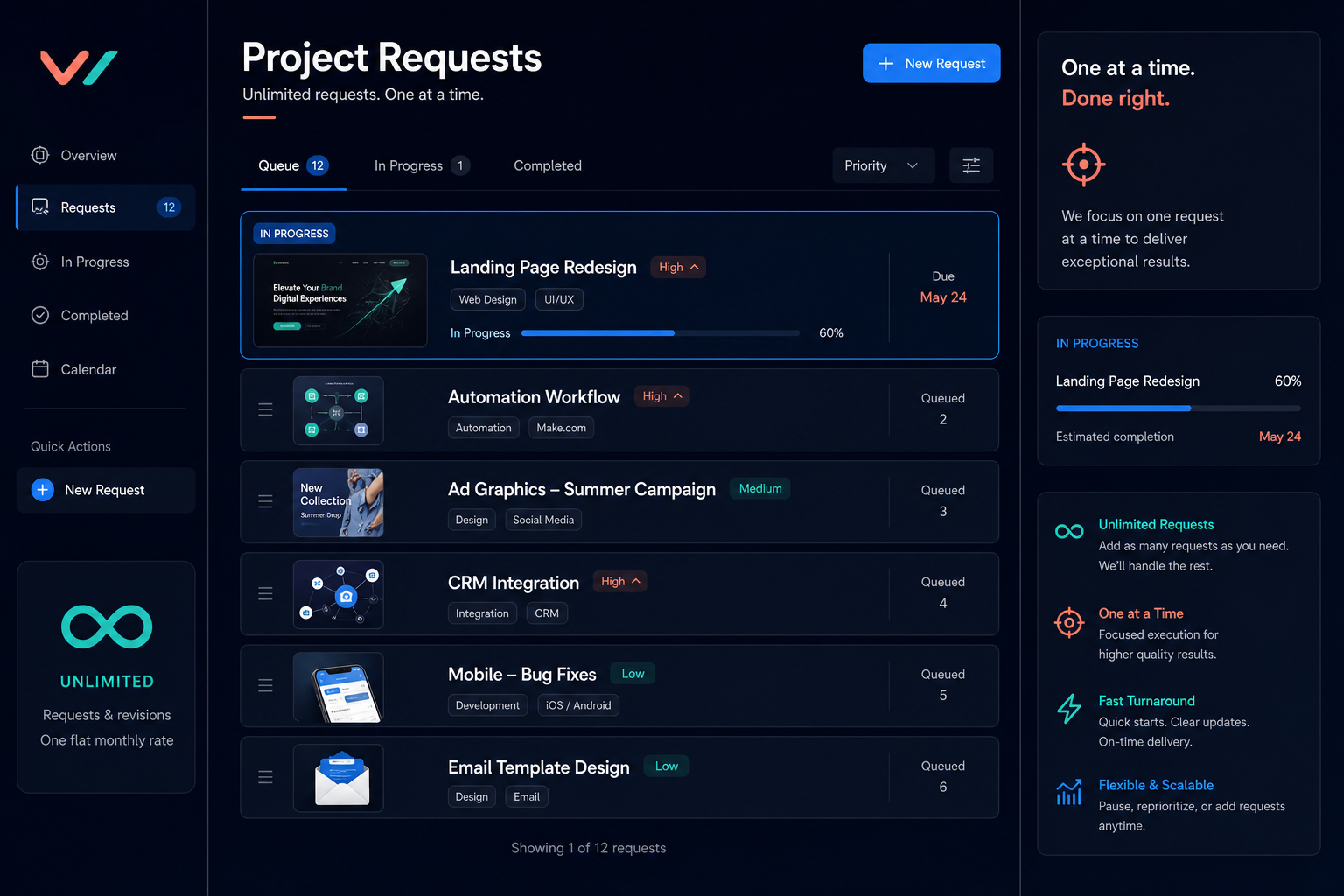
- Consistent delivery: one organized queue instead of scattered freelancers and disconnected subscriptions.
Why the model works
I use these platforms every day across real businesses. That repetition matters. It means I can recognize when AI will accelerate the job, when conventional code is the safer answer and when a simple manual process is better than an overbuilt automation.
The result is a leaner relationship: you tell me what the business needs next, I handle the technical decisions, and you review finished work.
Want the tools and the operator?
See the monthly plans for unlimited task, design and development requests—or book a call and tell me what is stuck.
Explore the plans