Businesses often compare technical support using hourly rates alone. That misses the bigger costs: recruiting, management, handoffs, context switching and the time work spends waiting for the right person.
The right model is the one that matches the shape of your backlog.
When a full-time hire wins
Hire when you have a stable role with enough focused work to fill most weeks, the knowledge must remain deeply embedded inside the company and you are ready to manage career development, benefits and coverage.
The tradeoff is specialization. A great developer is not automatically a CRM administrator, automation builder, designer and IT troubleshooter.
When a project agency wins
An agency is a strong fit for a defined project with a clear scope, deadline and set of deliverables. Larger agencies can also supply multiple specialists and formal project management.
The model becomes less efficient when priorities change every week or many small requests fall outside the statement of work. Each change may require estimation, approval and a new schedule.
When freelancers win
A specialist freelancer can be the fastest route to a narrow outcome. The challenge appears when the work spans several systems: you become the person coordinating access, decisions and handoffs between specialists.
When a technical retainer wins
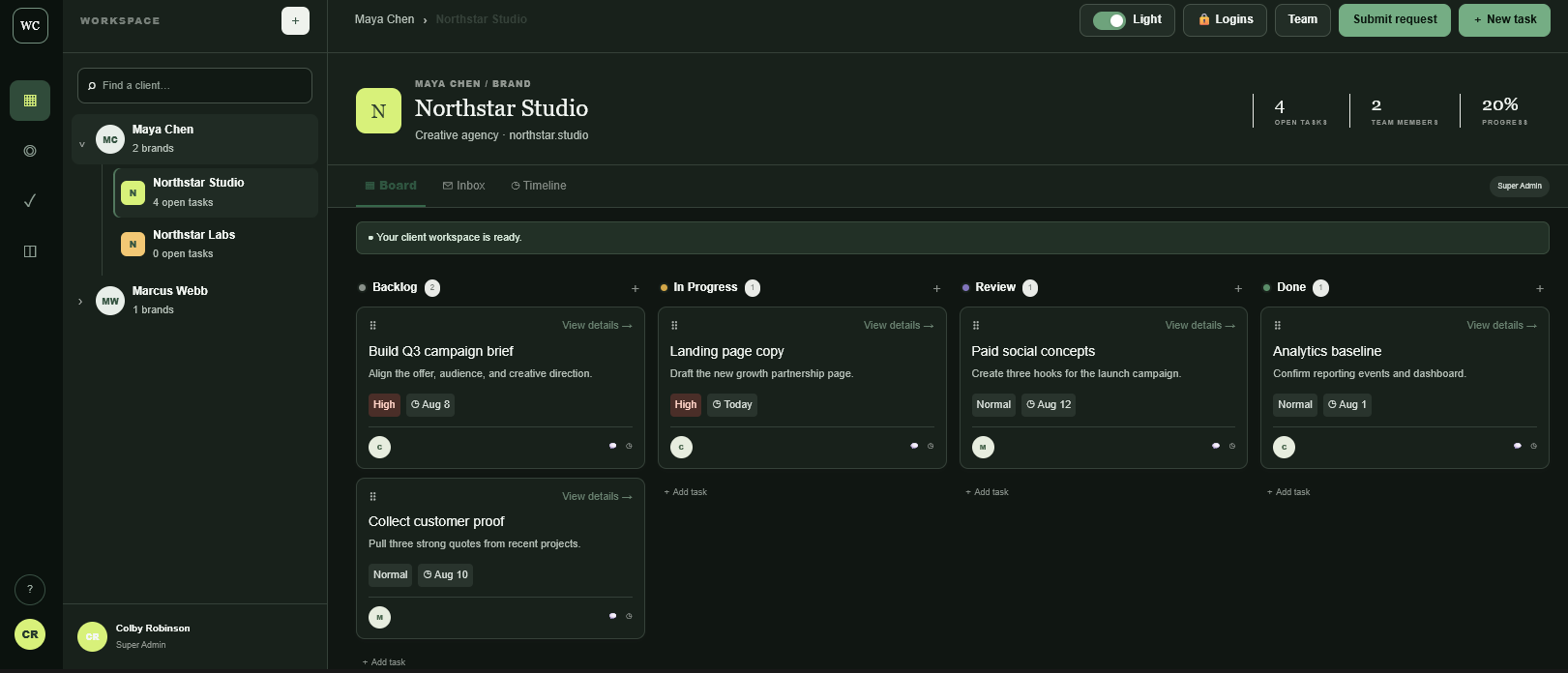
A retainer is useful when work is ongoing, variable and cross-disciplinary. Instead of defining a new project every time, you maintain one prioritized queue and continuously move the next valuable item forward.
Questions to ask before deciding
- Is the backlog one discipline or several?
- Does the work arrive continuously or in one defined project?
- How many brands or client accounts need attention?
- Who will coordinate specialists and approve work?
- How costly is it when a small request waits three weeks?
- Do you need one priority moving or several projects active?
Matching the model to the work
For one primary business with a varied backlog, an operator-style plan can replace the search for a different vendor every week. Agencies and multi-project entrepreneurs may need two active projects plus higher-level prioritization across brands. A one-time website build still makes sense when the goal is genuinely finite and there is no ongoing technical queue.
No model is universally best. The honest decision comes from mapping the next three months of work, grouping it by discipline and estimating the management effort each option requires.
Choose support around your moving parts.
Compare The Operator for one primary brand with The Growth Partner for agencies and multi-project businesses.
Compare the plans